Our Blog

Team Dark Chocolate

February 13th, 2018

Valentine’s Day is the holiday to celebrate all the treasured relationships in your life. It’s a time to honor love in all shapes and forms with cards, social gatherings, and sometimes even binge eating of sweets.

It's hard to look the other way when grocery stores and pharmacies are invaded with goodies connected to the Valentine’s Day theme, and especially if you’re on the receiving end of some of these sweets. We get it. In fact, we’re all for it!

However, we also support a cavity-free smile. So in the interest of your dental and general health, and because we think it’s genuinely tasty, Drs. Maoloni and Pope recommends an alternative to the Valentine treats you may be accustomed to: dark chocolate. 

Yes, Healthy Chocolate Exists

Studies have shown that dark chocolate is high in flavonoids, an ingredient found in the cocoa beans used to make chocolate. Flavonoids can help protect the body against toxins, reduce blood pressure, and improve blood flow to the heart and brain.

By opting for dark chocolate rather than milk chocolate, you get to reap these benefits! Pretty sweet, right? Just make sure to stick to high-quality dark chocolates that have undergone minimal processing.

Dark Chocolate, AKA Protector of Teeth

Not only does dark chocolate provide some nice benefits for your overall health, it also helps protect your teeth against cavities! According to the Texas A&M Health Science Center, dark chocolate contains high amounts of tannins, another ingredient present in cocoa beans.

Tannins can actually help prevent cavities by interfering with the bacteria that causes them. Think of them as scarecrows for bacteria. They don’t always prevail, but isn’t it nice to have them there?

Smooth Never Sticky

Unlike many popular candies, dark chocolate is less likely to stick in the crevices of your teeth. Chewy, gooey sweets are more likely to hang around in your mouth for longer periods of time, which means they raise the odds of your harboring cavity-creating bacteria.

While some dark chocolates have additives like caramel or marshmallow, it’s best to opt for the plain varieties, which are just as delicious. If you’re feeling festive, though, a dark chocolate with caramel is still better than a milk chocolate with caramel, so that’s the way to go!

While dark chocolate has some pretty sweet benefits, the most important thing to remember (whether you go the dark chocolate route or not), is that moderation is key. That being said, we hope you have fun satisfying your sweet tooth and shopping for treats for your friends and loved ones. Happy Valentine’s Day from all of us at Orthodontic Associates, LTD.!

Pick the right electric toothbrush!

February 6th, 2018

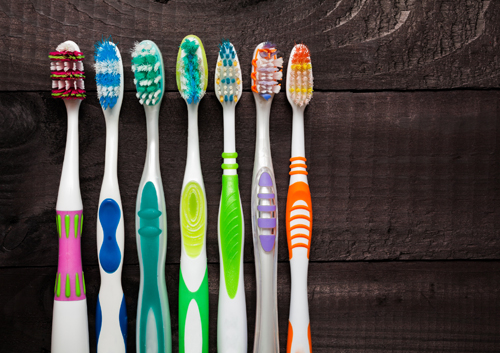
The electronic toothbrush has undergone several technological advances since the 1960s. Everything from design and bristle motions to rotation, oscillation, and sonic vibration has led to dramatic changes in this necessary tool over time.

Rotation oscillation happens when the head of the toothbrush rotates from one direction to the other. The benefit of powered toothbrushes is that they can produce 50,000 strokes per minute, compared to 300 strokes with a manual toothbrush.

When you’re thinking about brush head size, smaller brush heads are best for hard-to-reach areas and small mouths. Brush heads should be replaced every three to six months as needed. A good way to save money is to designate a brush head for each family member which can be taken on and off a shared base motor.

Having a base motor or rechargeable toothbrush can deliver enough power on a full charge for a week of brushing, which makes it convenient for travel or when life gets busy. Some toothbrushes include audible signals that let you know when to switch the area of your mouth you’re brushing or when a full two minutes has gone by.

Do you have sensitive teeth? Studies have indicated that people tend to apply more pressure on their teeth when they use a manual toothbrush. This makes an electric toothbrush a preferable option if you’re having issues with sensitive teeth or gums.

There are even electric models with pressure sensors that will stop the brush from spinning when you press too hard against your teeth!

Everyone can benefit from having an electric toothbrush. A large handle size can be taken into consideration if a member of the household is young, or has a physical disability or arthritis. They’re even recommended for children in order to maintain good oral hygiene from a young age.

Biofilm is a term used for plaque or debris that builds up in your mouth. If not properly addressed, this can cause serious bacterial infections to your gums and teeth. If you want to remove biofilm in the most efficient way, an automatic toothbrush is the way to go.

When you're ready to make your decision, make sure to consult with Drs. Maoloni and Pope at our Flossmoor and New Lenox, IL office to decide which electric toothbrush is right for you!

Dangers of DIY Orthodontics on the Internet

January 30th, 2018

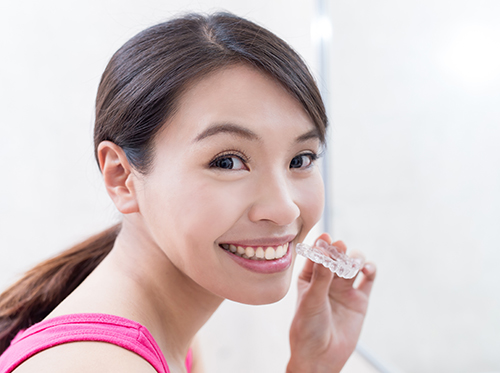
All over the Internet you'll find videos and articles showing how you can close the gap between teeth or space them out. There is a plethora of DIY orthodontic techniques out there — you can even mail order your own impressions to get clear aligners, without even seeing a dentist or orthodontist. Following the instructions laid out in these videos and articles (by people who have zero training in orthodontics) is about the worst decision you can make for your overall oral health.

Performing DIY or at-home orthodontia can lead to or cause:

  • Loss of teeth
  • Infection
  • Cavities or infections that are missed or undiagnosed
  • Gum damage

Dr. Christina Carter, president of the Northeastern Society of Orthodontists, says that DIY orthodontics can have terrible consequences. She spoke to TODAY about closing gaps between teeth using rubber bands or elastics:

"The teeth are connected to the gums and the blood supply and there is a risk of infection, of tearing the gums which might not heal properly, and a risk of damaging the attachment between the tooth and gums so the tooth no longer gets the support it needs." She also noted, "A simple rubber band can actually slide up the tooth and cut all the attachments to it and you can actually lose a tooth."

One of the worst parts about DIY orthodontics is that you never consult with a trained orthodontist, so you're really operating on a dangerous lack of information. It's best not to risk damage to your teeth or infection. Let Drs. Maoloni and Pope know what you want to accomplish with your teeth and we will help you find the safest and most cost-effective way to achieve it.

Drs. Maoloni and Pope want you to be informed and practical about your oral health. Should you have any questions about orthodontic treatment options, please do not hesitate to give us a call at our convenient Flossmoor and New Lenox, IL office.

TMD Problems and How You Can Prevent Them

January 23rd, 2018

Temporomandibular joint disorders (TMD) describe a set of conditions that involve trouble with your jaw and face muscles. They result from a problem in the temporomandibular joint (TMJ), which is a hinge that connects the temporal bones, in your skull in front of each ear, to your jaw. The joint enables you to talk, yawn, and chew by letting your mouth move.

TMD can be very painful and interfere with functions such as eating and speaking. This what to watch for and how to try to prevent TMD.

Risk Factors for TMD

You are at higher risk for TMD if you are a women than if you are male. The disorder is most common among adults between the ages of 20 and 40 years. Other risk factors for TMJ disorders include the following.

  • Arthritis in the area, making movement more difficult
  • Excessive tooth grinding, because it increases stress on the joint
  • General stress, which can lead you to clench your teeth and strain facial muscles

Symptoms of TMD

Symptoms of TMD can last for just a short while, or for several years. Seeing Drs. Maoloni and Pope is important if your symptoms make it impossible for you to eat regularly or if you have unbearable pain or discomfort. The following symptoms can occur on both or one side of your face.

  • Aching or very tired facial muscles
  • Jaws that are fixed open or shut without you being able to unlock them
  • Grating or popping sounds when you chew or close or open your mouth
  • Pain in the entire area, including the mouth, jaw, neck, or shoulders, that comes on when you chew or yawn

Preventing TMD

You can try to prevent TMD by focusing on reducing risk factors. If you grind your teeth at night, ask Drs. Maoloni and Pope about wearing a mouthguard. If you are overly stressed, look into ways to better manage your stress and relax your muscles. Another strategy for trying to prevent the development of TMD is to avoid chewing gum, since that puts stress on your jaw.

If you have questions about TMD, don’t hesitate to contact our Flossmoor and New Lenox, IL office.