Our Blog

What happens if I have an orthodontic emergency while I'm on vacation?

July 9th, 2025

At Orthodontic Associates, LTD., there are a few things we want to remind you of when you're on vacation, so that a day with friends and family won’t be spent dealing with an orthodontic emergency. Firstly, we are here for you whether you are in town or out of town on vacation. Give us a call and we may be able to address the problem over the phone. Second, if we are unable to help you fix the problem over the phone, we will help you find an orthodontic practice in your vacation area that can help you.

If you experience problems reaching our office, we suggest going online and searching for orthodontic practices in your area. Most orthodontists will lend a helping hand to another orthodontic patient and get them out of pain or discomfort.

If you have braces, whether they are metal, ceramic, or lingual, Dr. Pope and our team suggest steering clear of the following foods to avoid broken brackets and/or wire distortion while you are on vacation:

  • Chewy, sticky, or gummy food
  • Apples, pears and other whole fruits (cut fruit into thin wedges before consuming)
  • Bagels and hard rolls
  • Bubble gum
  • Corn on the cob
  • Hard candies
  • Hard cookies
  • Pretzels
  • All varieties of nuts, including peanuts, almonds, and cashews

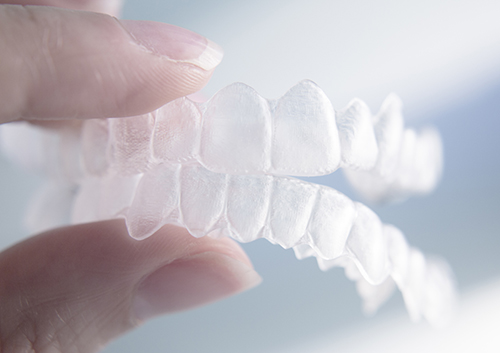
Finally, if you have clear aligners and you lose your tray, don’t worry! Simply put in either the previous tray or the next tray and contact us as soon as you get home!

Follow these tips and you can have a worry-free vacation!

Celebrate the Fourth with a Smile!

July 2nd, 2025

Surveys show that Independence Day is the biggest cookout day of the year. If you’re celebrating with a feast of hot dogs, fresh grilled corn on the cob, burgers, and other traditional treats, we have some tips to help make your holiday dining fun for you and safe for your braces, so you don’t miss out on any of the fun in Flossmoor and New Lenox, IL! 

  • Skip the “Finger Foods”

Traditional BBQ fare like ribs, burgers, chicken legs, and corn on the cob are usually eaten with fingers, not utensils. This means biting into these delicious favorites with your front teeth, which puts pressure on your braces and can lead to bent wires and broken or loose brackets. 

But being careful with your braces doesn’t mean you have to miss out! Use a knife and fork to cut food into smaller pieces or cut the kernels off the cob, and you can chew with your back teeth, protecting your brackets and wires. 

  • Edit The Menu

Crunchy, hard, and sticky foods should never be on the menu when you’re wearing braces. These foods can damage your wires and brackets or get stuck between your braces and your teeth. 

A Fourth of July BBQ is the time for clever substitutions. Exchange crusty rolls and seeded buns for softer, seedless versions. Dig into the potato or pasta salad instead of munching on crunchy chips. Skip hard candies, nuts, and sticky smores and enjoy creamy soft desserts like yogurt parfaits, colorful berries, and soft ice creams.

  • Water’s Always a Good Choice on a Hot Day

Proper hydration is essential for both your overall health and your oral health. Drinking water helps prevent cavities by washing away food particles and bacteria and reducing acidic conditions in the mouth. A swish can help dislodge food from your braces when you can’t get to a toothbrush. And water, unlike some darker beverages, won’t stain the enamel next to your brackets.

  • Keep Up the Good Work

During your busy holiday, whether at home or on the road, be sure to make time to brush and floss as directed after meals and before bed. 

Talk to Dr. Pope about easy ways to protect your braces and teeth for stress-free holiday dining. Everyone at Orthodontic Associates, LTD. wants to make sure that, whether you’re enjoying a meal with family and friends, marching in the parade, oohing and aahing at the fireworks, or all of the above, your Fourth of July is filled with healthy, happy smiles!

Can Toothpaste Repair Tooth Decay?

June 25th, 2025

It seems like the ads are everywhere these days—repair your enamel and reverse tooth decay with a tube of toothpaste! Are these claims too good to be true? Let’s dive into the science of tooth decay—how decay develops and how (and if!) it can be reversed.

Teeth can stand up to the powerful pressures of biting and chewing because over 95% of our enamel is made up of minerals. Calcium and phosphate ions in our teeth bond to form a crystal structure called hydroxyapatite. Because of the strength of this crystalline design, tooth enamel is the hardest substance in our bodies, even stronger than our bones. 

But bones, like most other parts of our bodies, are living tissue, which means that they can create new cells to replace old or damaged cells. Tooth enamel can’t regenerate new cells to repair itself. This means that when a cavity has made a hole in the tooth, the enamel can’t grow back. And, while enamel structure is very strong, it’s also vulnerable to damage—specifically, damage from acids. 

Our teeth are exposed to acids throughout the day, whether they are acids created by plaque bacteria or the acidic foods and drinks we consume. Acids dissolve mineral bonds, stripping calcium and phosphate minerals from the enamel and leaving weak spots in the tooth surface. This process is called demineralization. Demineralization is the first stage of tooth decay.

The good news? Our bodies are designed with a built-in defense mechanism to prevent demineralization from causing lasting damage. All through the day, saliva helps wash away acids in the mouth and bathes our teeth with new calcium and phosphate ions. These ions bond with the calcium and phosphate in our enamel, restoring enamel strength. This protective repair process is called remineralization. 

Now for the bad news. In the tug of war between demineralization and remineralization, saliva can only do so much. If your diet is heavy with acids, if you don’t brush away acid-producing plaque bacteria regularly, if you eat a lot of the sugars and starches which feed plaque bacteria, the remineralizing effects of saliva can’t keep up with the demineralizing effects of acids.

The first visible sign of demineralization is often a white spot on the tooth where minerals have been stripped from enamel. Studies have shown that enamel-strengthening toothpaste can be effective in this very first stage of tooth decay. Toothpastes which advertise enamel repair generally contain one or more of these ingredients:

  • Calcium Phosphate
  • Hydroxyapatite
  • Fluoride 

Toothpastes with calcium phosphate or hydroxyapatite contain calcium and phosphate minerals, the building blocks of tooth enamel. Studies have suggested that these minerals can replace the calcium and phosphate ions stripped from enamel. These toothpastes may or may not contain fluoride, which is something you should discuss with your dentist before deciding on a specific toothpaste.

Fluoride toothpastes remineralize enamel—and more! Fluoride ions are attracted to the tooth’s surface, and, when fluoride ions join with the calcium and phosphate ions there, they form fluorapatite. Fluorapatite crystals are larger, stronger, and more resistant to acids than hydroxyapatite crystals. And, once bonded with tooth enamel, fluoride attracts the calcium and phosphate ions in saliva to remineralize the teeth more quickly. 

Why consider enamel-repair toothpaste? 

Once enamel is gone, it’s gone for good. If excess demineralization isn’t treated, a weak spot on the tooth surface will continue to erode, growing bigger and deeper until it becomes a hole in the enamel. This is a cavity, and your dentist will need to treat and repair your tooth to prevent the cavity from growing and potentially exposing the tooth’s pulp to bacteria and infection. 

If you wear braces, you want to be especially careful about excess demineralization. Because it can be hard to brush and floss effectively with braces, white spots and discolored patches are a common concern for those with braces, especially on the enamel around brackets.  

Talk to Dr. Pope at our Flossmoor and New Lenox, IL office about which toothpastes can help restore a healthy balance between the ongoing cycles of demineralization and remineralization when you have braces. While tooth-repair toothpaste can’t fix cavities, these products can often strengthen demineralized enamel and reverse this earliest stage of tooth decay.

What is a palatal expander?

June 18th, 2025

Orthodontists like Dr. Pope recommend a first orthodontic visit and evaluation for your child around the age of seven. We will evaluate your child’s jaw and facial development and make sure that there is enough room in the mouth for the permanent teeth when they arrive. One of the recommendations we might make for early treatment is the use of a palatal expander. If you are unfamiliar with this device, let’s take a closer look at why it’s necessary and what exactly it does.

Why do we recommend the palatal expander?

There are two dental arches, composed of the upper and the lower teeth, in your child’s mouth. This arch-shaped design is meant to accommodate all the permanent teeth. Further, when the upper and lower teeth meet, they should result in a healthy occlusion, or bite.

Sometimes, the upper dental arch is simply too small to accommodate all of your child’s permanent teeth, leading to crowding, extractions, and impacted teeth. Also, a too-narrow arch can result in a crossbite, where some of the upper teeth bite inside the lower ones. An improper bite can lead to problems such as TMJ (temporomandibular joint) disorder, improper wear and stress on teeth, certain speech difficulties, and other potential complications. The palatal expander was designed to prevent these problems from occurring.

What is a palatal expander and how does it work?

The expander itself is a device that increases the size of the upper dental arch. Before your child’s bones are finished growing, the space between the two bones of the upper palate is filled with cartilage. This tissue is flexible when children are young, but gradually fuses solidly into place by the time they are finished growing (usually in the early to mid-teens). If the arch can be widened to accommodate the emerging permanent teeth, or to reduce malocclusions, this improvement can also affect the need for, and length of, future dental work.

There are several types of expanders available at our Flossmoor and New Lenox, IL office. These are custom-made appliances, commonly attached between the upper teeth on each side of the jaw. The two halves of the device are connected with a screw-type mechanism that can be adjusted to widen the upper palate and dental arch with gentle pressure. This is a gradual process, with small adjustments usually made once or twice a day to slowly move the bones further apart. As weeks go by, you will notice a successful change in the spacing of the teeth. Your child might even develop a gap in the front teeth, which is normal and will generally close on its own.

If you would like more detailed information, talk to Dr. Pope about the palate expander. We can tell you what to expect from this treatment if we think it is best for your child’s unique needs, and how to make it as easy as possible for your child. Our goal is to provide your child with the healthiest teeth and bite possible, always making use of treatments that are both gentle and effective.