Our Blog

How Long Will I Wear My Braces?

April 8th, 2020

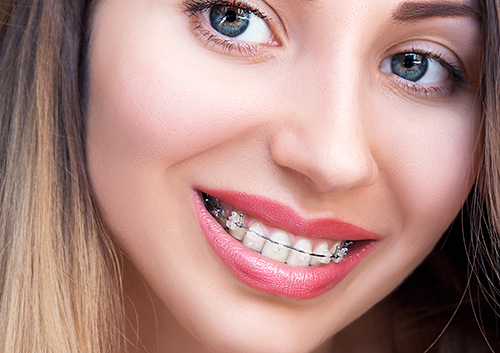
How long? Well, a beautiful smile is both science and art—proper teeth and jaw alignment united with aesthetically pleasing results. Orthodontists achieve both these outcomes with a careful analysis of any dental and facial problems, a treatment plan designed specifically for each patient’s needs, and adjustments through each phase of treatment to carefully bring about that beautiful smile.

And that’s a long way of saying, there’s no one, standard answer as to how long a patient will wear braces because there is no one, standard patient. Often, treatment takes from 18 to 24 months, but it can be months shorter or months longer depending on a variety of different circumstances.

  • Different Needs

Your orthodontic needs and goals will generally determine your treatment time. Some patients need only a bit of alignment, which can lead to a fairly short orthodontic experience. Some have malocclusions such as crossbites and open bites that require more complex and lengthy treatment.

And, while we used to think of orthodontics as a teenage rite of passage, that’s certainly no longer the case. Some children will need two-phase orthodontic treatment, where early procedures before the adult teeth even come in ease the way for any necessary second stage treatment when the permanent teeth arrive years later. And some adults will want orthodontic work later in life, where denser bone tissue might lead to (somewhat) longer treatment.

  • Different Appliances

Today’s orthodontics offers you many choices in appliances. Lingual braces are an almost invisible option, with brackets and wires on the inside of the teeth. Aligners use clear, custom molded trays to move the teeth into a better position with each new tray. Even traditional braces are smaller and sleeker today, with metal or less visible ceramic brackets. Depending on the orthodontic goals you want to achieve, there might be a small difference in the amount of time each appliance will take to get you to those goals. Talk to us about all your options and what they mean for treatment time.

  • Different Levels of Participation in the Process

This is one area you can make a real difference! If you follow our instructions for using your appliances most effectively, you’ll make progress as quickly as possible. If you have aligner trays, be sure to wear them for as long as directed each day. If you have rubber bands attached to brackets on your upper and lower teeth, wear them for as many hours as required, because these little bands are actually the tools that are moving your teeth into alignment. If you don’t wear your braces or aligners as directed, not much is going to happen, and certainly not on schedule.

Give our Flossmoor and New Lenox, IL office a call, and we can discuss your goals for creating your very best smile. Once we’ve decided on a treatment plan, Drs. Maoloni and Pope can give you a fairly good estimate as to how long your particular treatment will take. And, when you get to share that beautiful, healthy smile, the time you’ve spent achieving it will be well worth it!


Anxiety, Phobia, and Fear of the Dentist

April 1st, 2020

Not many people look forward to going to the dentist, especially if you already know that you need dental work done. A small amount of anxiety is one thing, but dental phobia, or odontophobia, is something else entirely. It is an irrational fear of going to the dentist. If you have it, you might be unable to force yourself to go to the dentist, even if you are suffering from bad tooth pain. The effects of dental phobia can be serious, but there are ways to overcome your fear of the dentist to help you achieve and maintain good oral health.

Causes of Dental Phobia

You can develop dental phobia for a variety of reasons, including the following.

  • Fear of pain, which you might acquire based on others’ horror stories of their trips to the dentist.
  • Fear of needles, such as those used to provide anesthesia.
  • A previous bad experience, when something went wrong and pain was intolerable.
  • Lack of control from not knowing what is happening or how uncomfortable a procedure might be.

Consequences of Dental Phobia

Avoiding the dentist can have long-term consequences. When caught early, tooth decay is easily stopped with a minor filling. If you let the decay go, you can end up losing your tooth and have chronic pain. A dentist can also check for early signs of gum disease, which, if left untreated, could lead to losing one or more teeth.

Even if you do not have a particular problem, going to a dentist for regular cleanings is a good idea because the hygienist can point out where you need to brush better and remove the plaque from your teeth.

Getting Over Fear of the Dentist

Most patients with dental phobia can get over their condition. These are some approaches that Drs. Maoloni and Pope and our team recommend:

  • Explain each step of the process
  • Let you know that you can stop the procedure at any time
  • Encourage you to come with a family member or friend
  • Help you with deep breathing techniques

The Truth about TMJ

March 4th, 2020

TMJ is the quick way of referring to your Temporomandibular Joint. Pardon the pun, but that’s quite a mouthful! What is this joint, what does it do, and, if your Drs. Maoloni and Pope and our team have told you that you have a TMJ disorder, what can we do to help?

The Temporomandibular Joint

Your two temporomandibular joints are amazing works of anatomical design. These are the joints where the temporal bone in the skull meets the mandible bone of the jaw, and allow our mouths to open and close, move back and forth, and slide from side to side. Muscle, bone, and cartilage work together to provide easy movement and to cushion the joint. But sometimes, the joint doesn’t work as smoothly as it should, and this can lead to Temporomandibular Joint Disorder, or TMD.

When Should You Suspect You Have TMD?

You might have TMD if you experience any of these symptoms:

  • Painful chewing
  • Pain around your TMJ, or in your face or neck
  • Earaches
  • Changes in your bite
  • Jaws that are limited in movement or lock open or shut
  • Clicking, popping or grating noises when you open and shut your jaw

There are many conditions linked to TMD. If you grind your teeth at night, have arthritis in the jaw, have suffered an injury or infection in the area, or have problems with your bite, for example, you might be more likely to have TMJ problems. If you suspect you have TMD, or suffer from any of the symptoms listed above for an extended period, give us a call.

Treating TMD

During your visit to our Flossmoor and New Lenox, IL office, we will check your medical history, and examine your head and neck. We can take an X-ray or scan if needed for further examination of the joint. Because there is no real scientific agreement yet about the best way to treat TMJ disorders, a conservative treatment plan is often best. If you do show signs of TMD, we might first suggest relaxation techniques, over-the-counter pain relievers, or the use of ice packs or moist heat compresses. A change to a softer diet can help, and you should stop chewing gum and making any exaggerated jaw movements.

If these self-care practices aren’t effective, we might suggest a nightguard. This appliance is a comfortable and flexible mouthguard custom fitted for you, and will bring relief from teeth grinding when worn at night. If this treatment is not effective, talk to us about other options.

Luckily, most cases of TMD are temporary and don’t become worse over time. But any persistent discomfort is a good reason to visit us. Whether you have TMD, or any other problem causing you pain in the head or jaw, we want to help.

Why Do I Need Rubber Bands?

February 26th, 2020

Getting braces is a huge step in creating the beautiful smile you want. It’s easy to see how important your wires and brackets are. Week by week, you and your family and friends can see the progress you’re making as your teeth become straighter. That makes all the careful brushing, periodic adjustments at our Flossmoor and New Lenox, IL office, and annoying loose ligatures worthwhile.

And while straight, even teeth are the visible reward you get for your months in braces, there’s a benefit that’s every bit as important that might go unnoticed by your friends and family—a healthy, properly aligned bite.

Many people have some kind of malocclusion, or bad bite. There are several different bite problems we treat. Some of the most common are:

  • Overjet (the upper front teeth protrude too far forward over the bottom teeth)
  • Underbite (the bottom teeth overlap the top teeth)
  • Crossbite (one or more teeth haven’t come in in the proper position, often with an upper tooth fitting inside a lower tooth)
  • Open bite (the upper and lower front teeth don’t touch).

When the jaws and teeth don’t fit together properly, you might be looking at damaged teeth, headaches, and painful problems with the temporomandibular joint, or jaw joint, in your future. That’s why correcting your bite early is so important. Using rubber bands with your braces is one of the most popular and effective ways to help create a better bite.

Bands are used with your braces to gradually move your teeth into their best position. Specially designed brackets with tiny hooks are bonded to very specific teeth. Why so specific? Because the placement of the brackets depends on which type of malocclusion we are correcting. Rubber bands are then attached to the bracket hooks, usually from an upper tooth to a lower one. When they are in just the right position, those little bands provide just enough force to move your teeth more quickly and effectively than braces alone can.

If you need bands to help correct any kind of malocclusion, you will play a very important part in your orthodontic treatment. It will be your job to attach your bands every day. Don’t worry—while it can seem confusing at first, we’ll make sure you know exactly how and where to place them.

How long should they stay in? You’ll probably need to wear your bands 24 hours a day. It’s while you’re moving your mouth and jaw muscles that your bands are working their hardest. Talk to us about removing them for brushing and flossing, and whether you should wear them while you eat.

Can you use the same bands over several days? Not a good idea. Bands are selected for size and strength to move your teeth very precisely from visit to visit. When bands stay on too long, they become too stretched out to supply the proper pressure needed to move your teeth efficiently. Drs. Maoloni and Pope will let you know how long is too long for your specific bands.

Are two bands better than one? Absolutely not. Again, the bands you’re given at each visit are designed for your specific needs. Too much pressure can actually be harmful. Just keep to your recommended schedule of replacing bands, and your orthodontic treatment will stay right on track.

Attaching rubber bands? Keeping them on all during the day? Replacing them as needed? All of these responsibilities might seem a bit overwhelming at first, but we are here to give you all the information and support you need to succeed. Because straight, even teeth and a bite that is healthy and functional? That’s truly how you create your beautiful smile!