Our Blog

Why Do I Need Rubber Bands?

February 26th, 2020

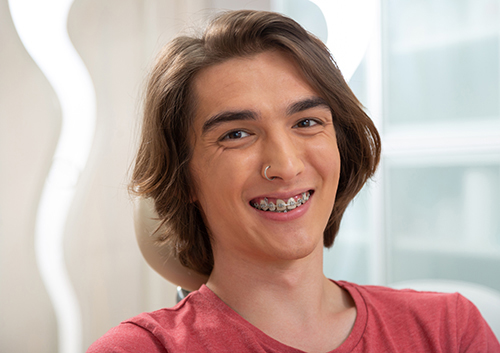
Getting braces is a huge step in creating the beautiful smile you want. It’s easy to see how important your wires and brackets are. Week by week, you and your family and friends can see the progress you’re making as your teeth become straighter. That makes all the careful brushing, periodic adjustments at our Flossmoor and New Lenox, IL office, and annoying loose ligatures worthwhile.

And while straight, even teeth are the visible reward you get for your months in braces, there’s a benefit that’s every bit as important that might go unnoticed by your friends and family—a healthy, properly aligned bite.

Many people have some kind of malocclusion, or bad bite. There are several different bite problems we treat. Some of the most common are:

  • Overjet (the upper front teeth protrude too far forward over the bottom teeth)
  • Underbite (the bottom teeth overlap the top teeth)
  • Crossbite (one or more teeth haven’t come in in the proper position, often with an upper tooth fitting inside a lower tooth)
  • Open bite (the upper and lower front teeth don’t touch).

When the jaws and teeth don’t fit together properly, you might be looking at damaged teeth, headaches, and painful problems with the temporomandibular joint, or jaw joint, in your future. That’s why correcting your bite early is so important. Using rubber bands with your braces is one of the most popular and effective ways to help create a better bite.

Bands are used with your braces to gradually move your teeth into their best position. Specially designed brackets with tiny hooks are bonded to very specific teeth. Why so specific? Because the placement of the brackets depends on which type of malocclusion we are correcting. Rubber bands are then attached to the bracket hooks, usually from an upper tooth to a lower one. When they are in just the right position, those little bands provide just enough force to move your teeth more quickly and effectively than braces alone can.

If you need bands to help correct any kind of malocclusion, you will play a very important part in your orthodontic treatment. It will be your job to attach your bands every day. Don’t worry—while it can seem confusing at first, we’ll make sure you know exactly how and where to place them.

How long should they stay in? You’ll probably need to wear your bands 24 hours a day. It’s while you’re moving your mouth and jaw muscles that your bands are working their hardest. Talk to us about removing them for brushing and flossing, and whether you should wear them while you eat.

Can you use the same bands over several days? Not a good idea. Bands are selected for size and strength to move your teeth very precisely from visit to visit. When bands stay on too long, they become too stretched out to supply the proper pressure needed to move your teeth efficiently. Drs. Maoloni and Pope will let you know how long is too long for your specific bands.

Are two bands better than one? Absolutely not. Again, the bands you’re given at each visit are designed for your specific needs. Too much pressure can actually be harmful. Just keep to your recommended schedule of replacing bands, and your orthodontic treatment will stay right on track.

Attaching rubber bands? Keeping them on all during the day? Replacing them as needed? All of these responsibilities might seem a bit overwhelming at first, but we are here to give you all the information and support you need to succeed. Because straight, even teeth and a bite that is healthy and functional? That’s truly how you create your beautiful smile!

 

Electric Toothbrushes vs. Regular Toothbrushes

February 19th, 2020

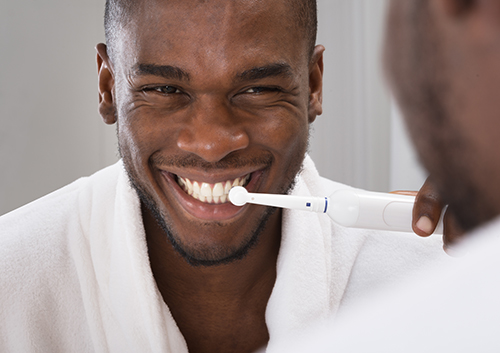
Convertible or sedan? Downtown or suburbs? Electric or manual toothbrush? As life decisions go, it’s certainly not choosing your next car, or deciding where you want to live. But, even when you are selecting a toothbrush, it helps to make a list of the pros and cons of the contenders before you make that final selection.

  • Efficiency

The most important factor in choosing a toothbrush is finding out which model works best to eliminate bacteria and plaque. And studies have shown that, used properly, both electric and manual toothbrushes do a great job of removing plaque. Some electric models can reach the backs of teeth and the gumline more easily, some manual head designs work better for your individual mouth and teeth, so your particular needs should dictate which style of toothbrush you use. Talk to us about the best methods to brush with your preferred toothbrush, and we’ll let you know if one type of toothbrush or the other might work better for you.

  • Health Considerations

Brushing too energetically can actually harm teeth and gums, causing sensitivity and damage to the enamel and gum tissue. An electric toothbrush should provide a continuous brushing motion without needing any pressure from the brusher. This might be the model for you if you have a too-vigorous approach to brushing, or sensitive teeth and gums.

An electric toothbrush can also be more efficient for older and younger brushers, those with limited mobility, and those with health conditions or injuries that make brushing with a regular toothbrush more difficult.

  • Cost

An electric toothbrush is not a one-time investment. You should change the removable head as often as you change your manual toothbrush (every three to four months, please). But this cost is offset if an electric toothbrush is more efficient in removing your plaque, easier to use, or even if you just prefer it to manual brushing. If you find that you brush better and more often with an electric toothbrush, the added expense is well worth it.

Whichever brush you decide on, the most important part of the brush is the person holding it! A regular appointment with your toothbrush for two minutes of thorough brushing in the morning and two in the evening, daily flossing, and regular visits to our office for checkups and cleanings will keep your teeth healthy and strong no matter which toothbrush you choose.

Questions about your toothbrush choices? Don’t hesitate to ask Drs. Maoloni and Pope at our Flossmoor and New Lenox, IL office.

The Start of Valentine’s Day

February 12th, 2020

Valentine’s Day, also known as Saint Valentine’s Day, has been said to originate with a Catholic priest named Valentine several thousand year ago. Valentine defied the emperor at the time by secretly marrying men and their brides after the emperor had made it illegal to marry. Emperor Claudius II did this because he wanted as many single young men to fight in his war as he could get.

Valentine disobeyed the emperor’s edict by continuing to marry couples until he was sentenced to death. Before his execution, he sent a letter to a secret love and signed it “From your Valentine.” Drs. Maoloni and Pope and our team have come up with some suggestions on how you can celebrate this Valentine’s Day, whether you have a valentine of your own or not.

Valentine's Day Ideas

  • Enjoy a tasty treat. There are plenty of options when it comes to cooking and/or baking on Valentine’s Day. Make your significant other his or her favorite meal or sweet treat, or make your own favorite dish to enjoy on this day. Oh, and be sure to make enough for leftovers!
  • Make a personalized card. Instead of buying a card from the grocery store, take the time to make your own for a loved one. People love handwritten notes, especially when it’s from someone special. If you’re single this Valentine’s Day, make a card for fellow single friend to brighten the day and remind the person that he or she is also loved.
  • Watch a movie. We all know there are plenty of romance movies out there. Put on your favorite romantic comedy, or pick up your significant other’s favorite movie to watch together. Even better, if you’re single, pick up your own favorite movies to watch to pass the time this Valentine’s Day.
  • Do nothing! We all know Valentine’s Day can sometimes get a lot of hype. If you’re worried about not making a reservation in time, don’t feel like planning an extravagant night out, or simply not in the holiday mood this year, spend your day sitting back and relaxing.

Valentine’s Day is a time to celebrate love and spend quality hours with the people you care about the most. Whether you’re in a relationship or single, take some time today to appreciate those you love in your life.

We wish you a happy Valentine’s Day celebration and look forward to seeing you at our Flossmoor and New Lenox, IL office during your next appointment.

Awesome Archwires

February 5th, 2020

When we think braces, we can’t help but think of the brackets on each tooth and the colorful ligature bands that surround them. But actually, the whole point of those brackets and bands is to hold the archwire in place as it gradually moves your teeth to create a better bite and a straighter smile. Let’s learn more about this talented part of your braces!

  • Wire We Wearing These, Anyway?

Archwires use gentle, continuous pressure to move your teeth into alignment. That sounds simple, but there is actually a lot going on. Teeth often need more than realigning. Some teeth need to be turned a bit, some tilted. Your teeth need to be better aligned with those next to them, of course, but also need to fit properly with the teeth above or below them. You might have a malocclusion, or bad bite.

How can one wire handle all that? Well, it can’t. That’s why there are different types of wire. We often use thinner, flexible wires at the beginning of treatment, to put gentle pressure on the teeth as they start their movement. Other wires are firmer, and can be helpful in later phases, when each tooth is carefully moved to its specific, ideal spot. Archwires can be round or rectangular, thicker or thinner, springy or stiff, remember their shape or be bendable—all depending on what they need to do.

Whew! This sounds confusing, but Drs. Maoloni and Pope and our team are archwire experts! At every adjustment appointment, we check on the progress of your alignment and choose the exact wire you need to take you to the next stage of your orthodontic journey.

  • Out of the Frying Pan, Into the Wire

Now that you have braces, it’s more challenging to make sure that your teeth are clean after eating. We’ll give you advice on how to get rid of the pesky food particles that sometimes get stuck in your braces. First, that’s absolutely not the look you’re going for. But, more than that, bacteria can use these “leftovers” as fuel to create the acids that damage your enamel and cause cavities.

There’s a whole new world of dental products out there waiting to help get your braces clean. Special toothbrush heads work in the spaces between your teeth and the archwire. There are floss threaders that can get dental floss into tight places, and flosses with one stiff end you can guide under the wire so you can direct the floss to where it’s needed. There are even tiny cone-shaped brushes called “interproximal brushes” that can fit under your wires to clean around your brackets and teeth.

Take a care kit to school or work with you so you can keep the tooth surface under your wires and around your brackets free of plaque. After all the hard work you’ve put in with your braces, the last thing you want is cavities once you’ve achieved your beautiful smile!

  • Down to the Wire

We said archwires were awesome, but we didn’t say they were perfect! We couldn’t leave without suggestions for handling any wire-related problems that might come up.

One of the most common problems is the irritation caused by the end of a wire that has somehow come loose. You might be able to use a cotton swab to gently push the wire flat against the tooth. If that doesn’t work, orthodontic wax can be used to cover the end of the problem wire and smoothed into place. We’ll provide you with instructions on how to handle these and other minor wire problems at home. 

Other problems should be run past us first. If you feel your wire is coming loose, or if a loose end is causing a lot of pain and irritation, call our Flossmoor and New Lenox, IL office. We’ll give you instructions on how to help, and make an appointment if necessary for a professional fix.

In fact, call us anytime you have questions about your braces. We’re here to help you understand each phase of the orthodontic process as you move step by step on the path to a healthy bite and a beautiful smile. And what’s more awesome than that?